
Articles · Patient guide
Acupuncture in the Cotswolds: A Patient's Guide to Acupuncture and Chinese Herbal Medicine
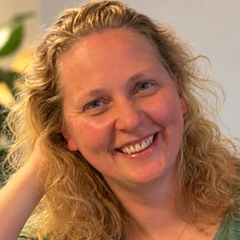
Written by Andrea Garratt, BSc (Hons), LicAc, MBAcC. Acupuncturist and Chinese herbal medicine practitioner in Upper Rissington, Gloucestershire.
Last reviewed 5 October 2026 · 8 min read · How these articles are written
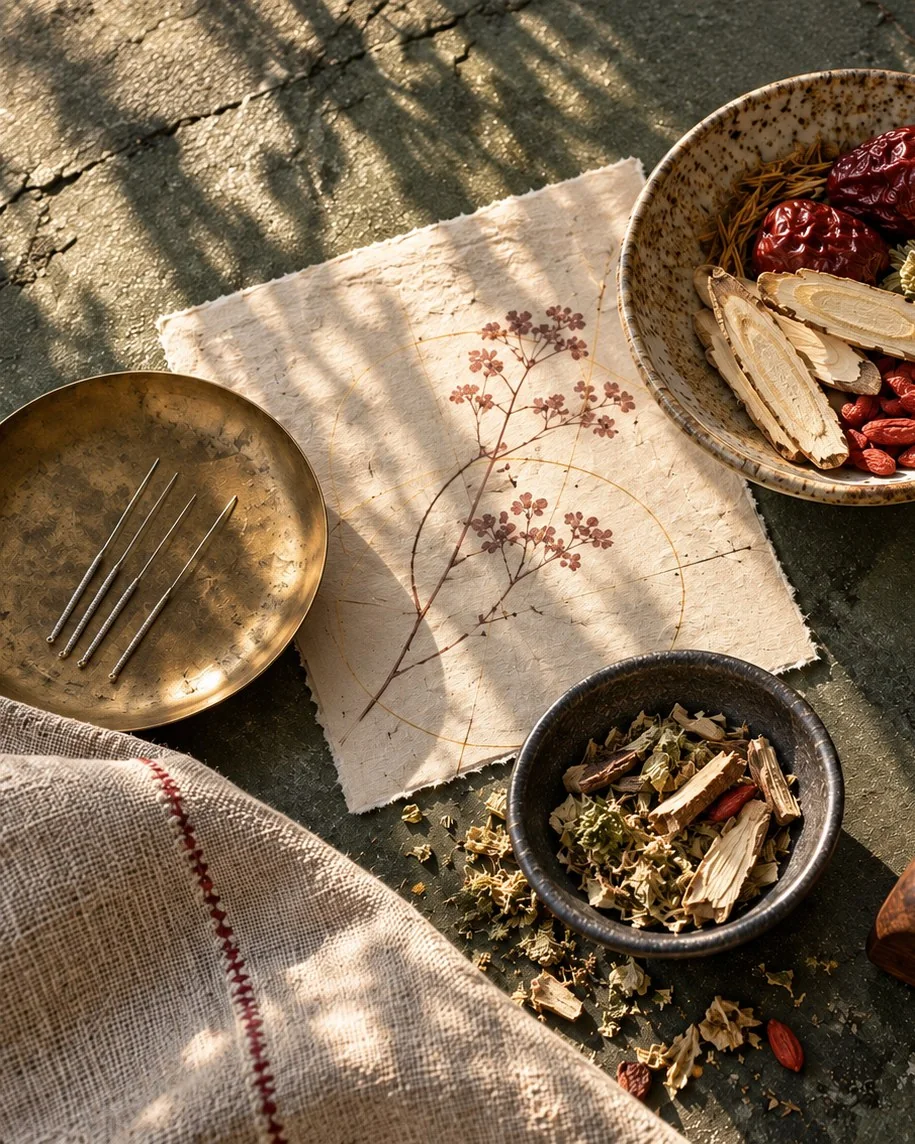
Resolve is a one-practitioner acupuncture and Chinese herbal medicine clinic in Upper Rissington, close to Bourton-on-the-Water, Stow-on-the-Wold and Burford. I'm Andrea Garratt, a British Acupuncture Council member who qualified in 2012. This guide explains what acupuncture and Chinese herbal medicine involve, what UK regulators accept about the evidence, how treatment fits alongside your GP, what it costs, and how to choose a practitioner you can trust.
Key points
- Resolve is a one-practitioner clinic in Upper Rissington, run by Andrea Garratt, a British Acupuncture Council member who qualified in 2012.
- Treatment combines acupuncture and individually prescribed Chinese herbal medicine, planned after a detailed consultation.
- UK advertising rules limit what acupuncturists can claim, and this guide sets out what regulators accept about the evidence.
- Acupuncture sits alongside your GP, not in place of them. Some symptoms need medical assessment first.
- A first appointment lasts 60 to 75 minutes and costs £76. Follow-ups are £56.
Most people who get in touch with me have already done a fair amount of reading. Often they've seen their GP, perhaps had blood tests that came back "normal", and they still don't feel like themselves. Somewhere between a waiting list and a friend's recommendation, acupuncture comes up, and with it a string of sensible questions. Does it work? Is it safe? How many sessions will I need? How do I know who to trust?
This page is my attempt to answer those questions plainly, including the parts other clinic websites tend to skip. It's also the starting point for a set of more detailed guides, which you'll find linked throughout and listed near the end.
What acupuncture is, and how I practise it
Acupuncture involves placing very fine, sterile, single-use needles at specific points on the body. A typical treatment uses a handful of needles, left in place for around twenty to thirty minutes while you rest.
I trained at the College of Integrated Chinese Medicine, where I studied two styles side by side. Traditional Chinese Medicine (TCM) looks at patterns: how your sleep, digestion, energy, temperature, cycle and mood relate to each other. Five Element acupuncture, the second style, pays particular attention to the person as a whole, including the emotional side of how someone is living. In practice I use both. The traditional theory gives me a structured way of organising what you tell me, and researchers are separately studying the physical side of what needling does, including its effects on nerves and connective tissue. Those are two different languages, and I think it's fair to tell you which one I'm speaking at any given moment.
What Chinese herbal medicine adds
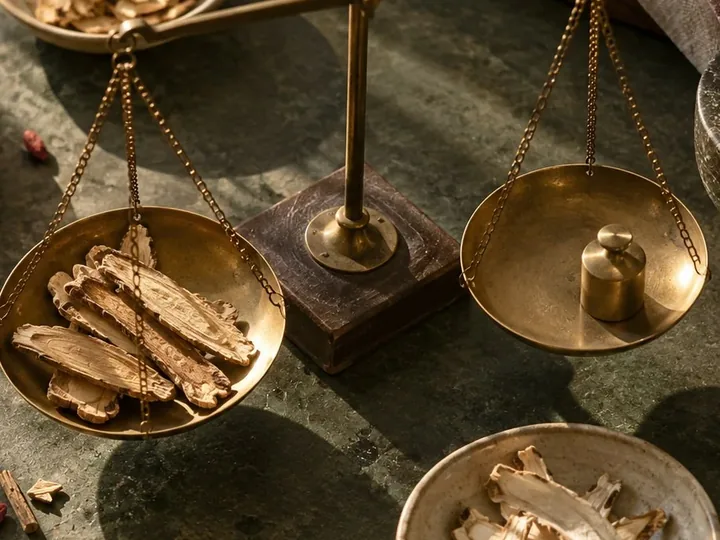
Chinese herbal medicine is the other half of my work. Instead of a fixed product off a shelf, a formula is written for you after a one-to-one consultation, usually combining several herbs, and adjusted as things change. I keep whole herbs in my own dispensary at the clinic, and I also offer herbal consultations online for people who can't travel.
Herbs raise questions that acupuncture doesn't: cost, taste, how they're sourced and how they sit with any medication you take. I've written a full guide to seeing a Chinese herbalist, including cost, safety and what to expect, and there's an overview on my Chinese herbal medicine page.
Who comes to see me
Much of my practice is women's health, which is why I went on to complete a postgraduate Diploma in Gynaecology, Fertility and Obstetrics. Women come at different stages of life. Some want to understand their menstrual cycle better, and my guide on period pain and irregular cycles from a Chinese medicine view covers how I approach that. Some are trying to conceive or going through IVF, and I've written separately about acupuncture alongside IVF in Cheltenham and the Cotswolds. Others are in perimenopause or past it, and my menopause guide explains how treatment sits alongside HRT and GP care. Fertility involves two people, so I see men too.
Headaches and migraine are another common reason people book, and they happen to be one of the areas with the clearest UK guidance, which I explain in my article on acupuncture for migraine and tension headaches.
Many of the people I see are also managing long-term health conditions under a GP or consultant. They tend to want a practitioner who will take the whole picture into account and give them unhurried time. My role there is to work alongside that medical care, never in place of it. You can read more on my women's health page.
What the evidence says, and what I'm allowed to tell you
In the UK, health claims in any advertising, including a clinic website, are overseen by the Advertising Standards Authority (ASA) and the Committee of Advertising Practice. Their standard is high: a practitioner should only say a treatment helps a condition if there is robust evidence from controlled clinical trials. I think that's a good standard, and it shapes how I write.
Based on the evidence it has reviewed, the ASA accepts claims that acupuncture can offer:
- short-term relief of tension-type headaches and of migraine headache
- short-term relief of chronic low back pain, and of neck pain or chronic neck pain
- short-term relief of jaw (temporomandibular, or TMJ) pain
- temporary relief of knee osteoarthritis pain, used alongside other treatment
- short-term improvement in the symptoms of overactive bladder, using electro-acupuncture at a specific point
The National Institute for Health and Care Excellence (NICE) also includes acupuncture in its guidance. Its headache guideline says a course of up to ten sessions over five to eight weeks can be considered to help prevent chronic tension-type headache and, in some circumstances, migraine. Its 2021 guideline on chronic primary pain lists a single course of acupuncture as one option for managing that kind of pain.
For the other concerns people bring to me, including fertility, menopause, menstrual health, sleep and stress, there is research, some of it encouraging and some of it not, but the regulator has not accepted it as strong enough to support treatment claims. So I won't promise outcomes there. What I can do is explain what treatment involves, how I'd approach your situation, and what the research has looked at, so you can decide for yourself. Many people tell me they find sessions deeply relaxing, and that's something I'm happy to say plainly.
Is acupuncture safe?
In the hands of a properly trained practitioner, serious problems are rare. Two large surveys published in the BMJ in 2001 looked at more than 60,000 treatments between them, including over 34,000 given by British Acupuncture Council members, and no serious adverse events were reported in that group. Minor effects are more common: a small bruise, feeling tired or lightheaded afterwards, or occasionally a brief worsening of symptoms.
Every needle I use is sterile and single-use, and I follow the British Acupuncture Council's code of safe practice. Please tell me if you take blood thinners, have a pacemaker, have a bleeding disorder or might be pregnant, because each of those changes how I treat.
When to see your GP first
Acupuncture and herbal medicine are not a substitute for medical assessment. Please see your GP, or call 111, before booking with me if you have new or unexplained symptoms, symptoms that are getting steadily worse, unexplained weight loss, bleeding that is unusual for you, or a sudden severe headache. For anything that feels like an emergency, call 999. If you're on prescribed medication, keep taking it as prescribed and talk to your prescriber before changing anything.
What treatment costs, and how many sessions you might need
As of April 2026, an initial acupuncture consultation and treatment costs £76 and lasts 60 to 75 minutes. Follow-up sessions cost £56 and last 45 to 60 minutes. Herbal consultations are £56 initially and £36 for follow-ups, with the herbs themselves priced individually. Full details are on my prices page.
The number of sessions depends on what you're coming for and how long it has been going on. Most people start weekly. I'll suggest a point at which we review together whether treatment is worth continuing, and if I don't think acupuncture is the right fit for you, I'll say so. My guide to your first acupuncture appointment walks through the whole process, including what the needles feel like.
How to choose an acupuncturist in the Cotswolds
Acupuncture isn't statutorily regulated in the UK, which means the title "acupuncturist" isn't protected by law. Training ranges from a weekend course to a three-year degree. A few checks will tell you a lot:
- Is the practitioner on a register accredited by the Professional Standards Authority? The British Acupuncture Council is one. You can see my BAcC listing here.
- Did they complete degree-level training in acupuncture? British Acupuncture Council members have trained to at least degree level.
- If you're interested in herbs, are they trained specifically in Chinese herbal medicine? Herbal training is separate from acupuncture training.
- Do they ask about your medical history and medication, and will they tell you when something needs your GP?
- Do they make big promises? Be cautious of anyone who guarantees results.
Finding the clinic
Resolve is at 3 Wright Road, Upper Rissington, Gloucestershire GL54 2NP, with off-road parking. People come from Bourton-on-the-Water, Stow-on-the-Wold, Burford, Northleach, Moreton-in-Marsh and Cheltenham, as well as the villages in between. Appointments run Monday to Thursday, with early and evening slots on several days, and you can book online or get in touch with a question first.
The guides in this series
- Your first acupuncture appointment: what to expect, including cost, sensation and number of sessions.
- Acupuncture alongside IVF in Cheltenham and the Cotswolds, with a clear look at the research and how timing works with your clinic.
- Acupuncture during menopause, and how it fits with HRT and GP care.
- Period pain and irregular cycles from a Chinese medicine point of view, with what to track before an appointment.
- Chinese herbal medicine: consultations, cost, safety and online appointments.
- Acupuncture for migraine and tension headaches, including what NICE recommends.
Frequently asked questions
Where is Resolve Acupuncture?
The clinic is at 3 Wright Road, Upper Rissington, Gloucestershire GL54 2NP, a short drive from Bourton-on-the-Water, Stow-on-the-Wold and Burford. There is off-road parking, and appointments run Monday to Thursday.
Is acupuncture regulated in the UK?
Acupuncture is not statutorily regulated in the UK. The safest route is to choose a practitioner on a register accredited by the Professional Standards Authority, such as the British Acupuncture Council, whose members complete degree-level training and follow codes of safe practice.
What can acupuncture help with?
UK advertising regulators accept clinical evidence that acupuncture can give short-term relief of tension-type headache, migraine, chronic low back pain, neck pain and jaw (TMJ) pain, and temporary relief of knee osteoarthritis pain alongside other treatment. For other concerns, research exists but has not been accepted as strong enough to make treatment claims, so it is best discussed individually.
How much does acupuncture cost at Resolve?
As of April 2026, an initial acupuncture consultation and treatment is £76 and follow-up sessions are £56. Chinese herbal medicine consultations are £56 initially and £36 for follow-ups, with herbs priced individually and quoted before you commit.
Do I need to see my GP before acupuncture?
You don't need a referral. If you have new, worsening or unexplained symptoms, see your GP first so they can be properly assessed. Acupuncture and herbal medicine are best used alongside your medical care, and you should not stop prescribed medication without speaking to your prescriber.
Can I have Chinese herbal medicine without acupuncture?
Yes. Herbal medicine can be prescribed on its own or alongside acupuncture, and herbal consultations are also available online for people who cannot travel to the clinic.
Sources
- Advertising Standards Authority / CAP. Health: Acupuncture (AdviceOnline, updated August 2024). asa.org.uk
- NICE. Headaches in over 12s: diagnosis and management (CG150), recommendations 1.3.20 and 1.3.21. nice.org.uk
- NICE. Chronic pain (primary and secondary) in over 16s (NG193), 2021. nice.org.uk
- MacPherson H, et al. The York acupuncture safety study. BMJ 2001;323:486. doi.org
- White A, et al. Adverse events following acupuncture: prospective survey of 32,000 consultations with doctors and physiotherapists. BMJ 2001;323:485. doi.org
- Professional Standards Authority. Accredited Registers: British Acupuncture Council. professionalstandards.org.uk
This article is general information written by a British Acupuncture Council member. It is not a substitute for advice from your GP or specialist. Please don't stop or change prescribed treatment without speaking to the clinician who prescribed it.
Keep reading
The full series
 Your first visitYour first acupuncture appointment: what to expectThe consultation, the needles, how it feels, how many sessions and what it costs.
 Fertility & IVFAcupuncture alongside IVF in Cheltenham and the CotswoldsWhat the research shows, and how sessions fit around your clinic’s timetable.
 MenopauseAcupuncture during perimenopause and menopauseHow it sits alongside HRT and your GP, and what treatment involves.
 The menstrual cyclePeriod pain and irregular cycles: a Chinese medicine viewHow Chinese medicine reads the cycle, when to see your GP first, and a three-cycle tracking routine.
 Herbal medicineSeeing a Chinese herbalist in the CotswoldsConsultations, regulation, safety checks, cost and online appointments.
 HeadachesAcupuncture for migraine and tension headachesWhat NICE recommends, what a course looks like and how to keep a headache diary.
Talk it through first, or book directly
If you'd like to know whether acupuncture or herbal medicine is a sensible option for you, send me a message or call 07702 928139. If you're ready, you can book an initial appointment online.