
Articles · Herb notes
Fu Shen, poria with pine root.
A gentle, grounding herb that classical texts place among those that calm the spirit.

Written by Andrea Garratt, BSc (Hons), LicAc, MBAcC. Part of my herb notes.
Last reviewed 26 October 2026 · 3 min read · How these articles are written
At a glance
- Chinese
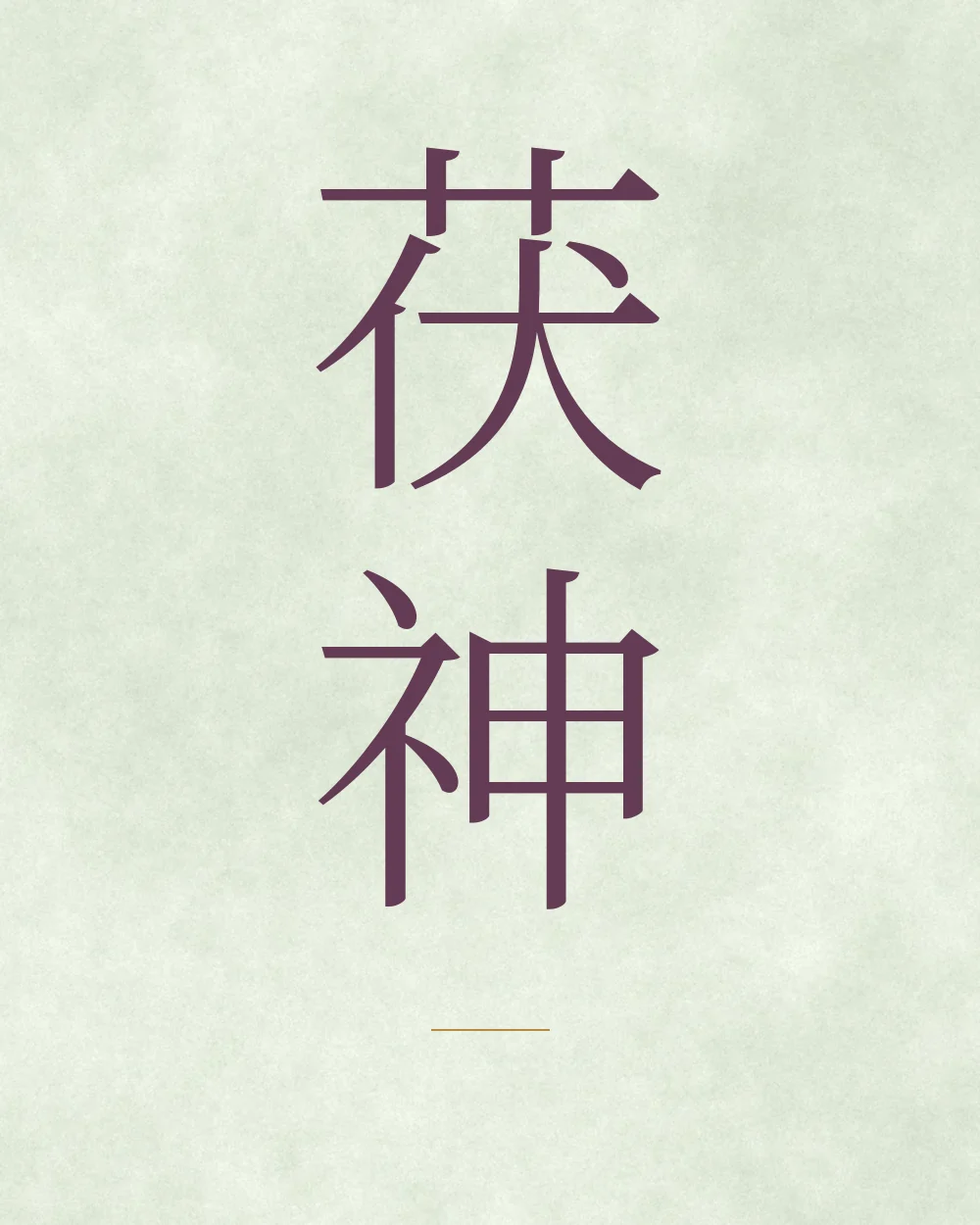
- 茯神
- Pinyin
- Fú Shén
- English
- Poria with pine root
- Source
- The part of the Poria fungus that grows around a pine root
- Traditional nature
- Sweet, bland, neutral
- Traditionally linked with
- Heart and Spleen
What it is
Poria is a fungus that grows on the roots of pine trees. Chinese medicine uses different parts of it as different herbs. Fu Ling is the main body of the fungus, Fu Ling Pi is its outer skin, and Fu Shen is the part that grows around the pine root itself, often with a piece of root still at its centre.
How Chinese medicine describes it
In classical terms, Fu Shen calms the Shen and supports the Heart and Spleen. Like Fu Ling, it is also described as gently draining damp.
Shen is often translated as “spirit” or “mind”. In Chinese medicine it describes the settledness of a person: how easily they rest, how clearly they think, and how steady they feel in themselves. Fu Shen is placed among the herbs traditionally used to anchor and settle the Shen, and its mild, neutral nature means it combines easily with others.
Where you’ll find it
- Gui Pi Tang (Restore the Spleen Decoction), a classical formula for the Heart and Spleen, where some versions use Fu Shen in place of Fu Ling.
- Formulas that combine settling herbs with those that nourish, chosen to suit the whole picture rather than a single concern.
How I use it
I never prescribe a single herb on its own. Fu Shen would only ever be part of a formula written for one person, after a one-to-one consultation, and adjusted at follow-ups as things change. Before anything is made up, I check the formula against everything you take, prescribed and over the counter, and ask whether you might be pregnant.
Please don’t buy and take Chinese herbs on your own because of something you’ve read here. My guide to seeing a Chinese herbalist explains how consultations, sourcing and safety checks work.
This note describes how Fu Shen is understood in traditional Chinese medicine. Terms such as “Liver”, “blood” and “Shen” belong to that system and don’t map directly onto Western anatomy. It isn’t a claim that the herb treats any condition. In the UK, herbal remedies made up by a practitioner for one person aren’t licensed medicines, and this page isn’t a substitute for advice from your GP.
Herb notes
Keep reading
 Herb notesBai Shao, white peony rootOne of the oldest herbs in the Chinese materia medica, and one I use often in formulas for women.
 Herb notesGui Zhi, cinnamon twigA warm, aromatic herb that opens the most famous formula in classical Chinese medicine.
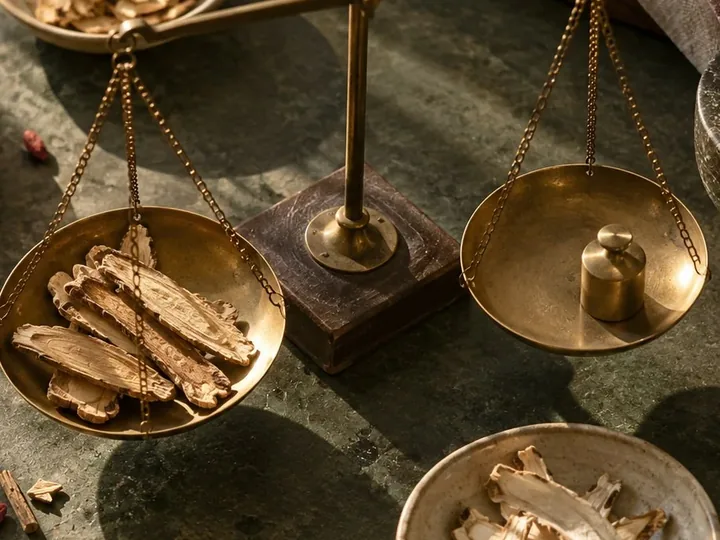 Herbal medicineSeeing a Chinese herbalist in the CotswoldsConsultations, regulation, safety checks, cost and online appointments.
Book a herbal consultation.
Consultations are available at the clinic in Upper Rissington or online. If you’d like to check first whether herbs suit you alongside your current medication, call or send a message.